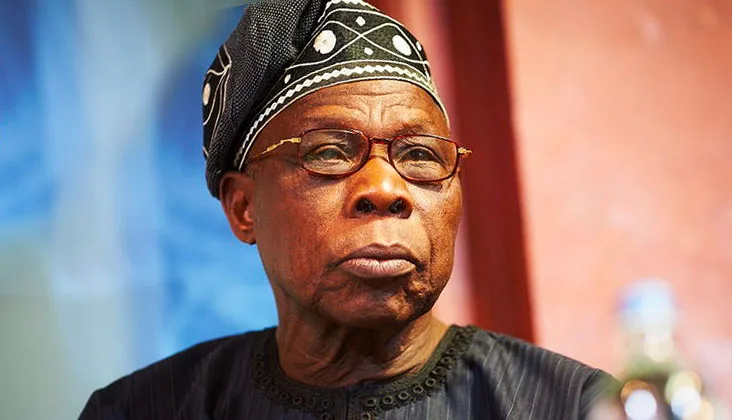
For the second time in 24 hours, the Presidency has fired back at former President Olusegun Obasanjo following his recent critique of President Bola Tinubu’s administration.
Speaking at the Chinua Achebe Leadership Forum held at Yale University, Obasanjo labelled Nigeria as a failing state and criticized the Tinubu administration’s “Emilokan” policy for falling short of expectations. He also accused the current government of rampant corruption, calling for a comprehensive reform of the Independent National Electoral Commission (INEC).
The initial response came from Sunday Dare, Special Adviser to President Tinubu on Public Communication and Orientation, who rebuked the former president, asserting that Obasanjo’s tenure was marred by democratic setbacks. Dare stated on Monday that successive administrations had been grappling with the consequences of Obasanjo’s leadership, while President Tinubu was making significant strides in resolving them.
Dare argued that Obasanjo lacked the moral standing to criticize the current government, insisting that he should first apologize to Nigerians for his own failures in building the country’s necessary infrastructure.
Bayo Onanuga, Special Adviser on Information and Strategy, also joined the fray, advising Nigerians to disregard Obasanjo’s criticisms. He accused Obasanjo of violating constitutional norms, noting that during his tenure, four governors from his own party were impeached in controversial circumstances.
Onanuga’s statement read:
“In his typical fashion, former President Obasanjo once again assumed the role of a self-appointed sage, criticizing subsequent administrations for Nigeria’s current state. However, his repeated finger-pointing has become an unproductive routine, overshadowing the expectation for him to contribute constructively as an elder statesman.
During his speech at Yale University, Obasanjo not only dismissed President Muhammadu Buhari as ‘Baba Go Slow’ but also disparaged President Bola Tinubu as ‘Emilokan’. He labelled Nigeria a failing nation. Yet, the irony of Obasanjo delivering this lecture at an event honouring Chinua Achebe is striking. Achebe, a respected moral and literary icon, had previously declined a national honour from Obasanjo’s administration, citing corruption and poor governance.
Records show that during Obasanjo’s tenure, incidents of unconstitutional conduct were rampant. Notably, four governors — Joshua Dariye of Plateau, Rashidi Ladoja of Oyo, Ayodele Fayose of Ekiti, and Diepreye Alamieyeseigha of Bayelsa — were impeached under questionable circumstances. It is hypocritical for Obasanjo, under whose watch these infractions occurred, to lecture on leadership and integrity.
Obasanjo often portrays himself as an economic reformer, but his track record suggests otherwise. He admitted to failing to prioritize gas development, a sector the Tinubu administration is now focusing on. While oil revenues soared during his time in office, critical infrastructure remained neglected. Roads like the Lagos-Ibadan expressway and educational institutions were left in disrepair. Instead, Obasanjo prioritized personal projects, such as his presidential library and Bell University.
His tenure also saw the controversial privatization of state assets, including the sale of ALSCON for a fraction of its value, and questionable expenditures on the power sector, amounting to $16 billion without tangible results. The privatization efforts did little to benefit the economy, instead enriching a few cronies.
On matters of integrity, Obasanjo’s record is marred by several scandals, including allegations of using public funds for personal expenses. His administration’s attempt at a third-term agenda in 2007 ended in a flawed election process, with President Umaru Yar’Adua acknowledging its serious shortcomings.
Despite Obasanjo’s criticism of the current INEC leadership, his own tenure was plagued by electoral malpractice. The insecurity issues that have plagued Nigeria can also be traced back to his administration, which witnessed the rise of militancy and the early stages of Boko Haram’s insurgency.
Obasanjo’s handling of the nation’s military and security forces was also lackluster. Unlike the Tinubu administration, which has made significant investments in the Armed Forces, Obasanjo failed to modernize the military. Under his watch, the military’s capacity dwindled, leaving subsequent administrations to rebuild.
While the Tinubu administration continues to tackle the economic challenges facing Nigeria, it would be more appropriate for Obasanjo to reflect on the shortcomings of his own leadership. His recent criticisms appear hypocritical, especially given the unresolved issues he left behind. Nigerians would be better served if he used his platform to offer constructive support rather than self-righteous commentary.”
This exchange signals a deepening rift between the Presidency and Obasanjo, with Tinubu’s advisers dismissing the former leader’s critique as baseless and out of touch with Nigeria’s current realities.