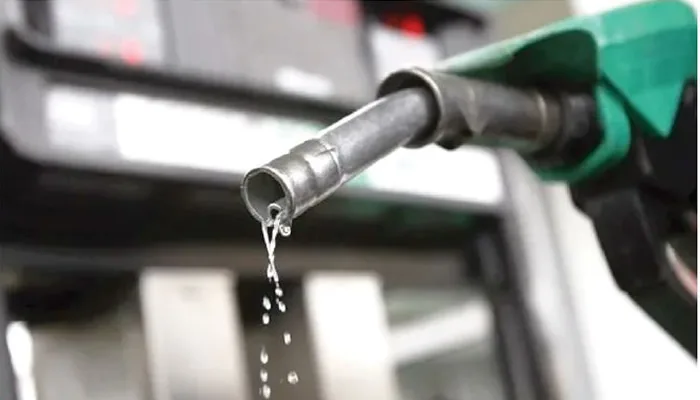
Many motorists in the Federal Capital Territory (FCT) have decried the recent increase in the pump price of petrol.
The News Agency of Nigeria (NAN) reports that the pump price of petrol was on Wednesday increased.
The development has led to high transportation costs as well as worsened the daily hardship residents were passing through.
NAN reports on Sunday in Abuja that many fuel stations which used to sell fuel between N1,261 and N1,295 have all increased to the new price.
The Nigerian National Petroleum Company Limited (NNPCL) is presently selling at N1,364 per liter, MRS, BOVAS, AP (Ardova), and Mobil, adjusted their pump prices to between N1,364 and N1,370 per liter.
Other outlets such as AA Rano, Emedab, Empire Energy, and Ranoil are selling petrol at higher rates, ranging from N1,370 to N1,444 per liter.
Investigations by NAN showed that pump price of petrol had been increased so many times this year, from around N900 per liter recorded in Feb.
Following the development, many commercial and private car owners had parked their cars as they could not afford the cost of fuelling them. Also, few commercial vehicles were currently operating.
Many commuters, including civil servants were seen stranded at various bus stops during the week as the few commercial vehicles operating had increased transport fares.
Some motorists, who spoke to NAN, expressed sadness about the situation, while calling on the Federal Government to intervene on the unstable fuel price and its hardship on citizens.
A civil servant, Mrs Zainab Idris, said that the hardship was too much to bear.
“The hardship is too much. At times, I do not go to work because there is no money for transportation, and feeding is even a bigger problem.”
Idris urged the government to intervene.
“I believe if the fuel price is stable, the cost of goods and services will be stable for a while.
“Whenever you go to the market to buy food stuff, you will discover the price has increased and it is not supposed to be like this, in this country whatsoever thing that goes up hardly come down.
“Although, the price of food stuff has slightly reduced but we cannot feel it because of the unstable cost of fuel,” she said.
Idris said that because of the economic hardship in the country, many civil servants had converted their cars to commercial use, also known as“kabu kabu’’ to make ends meet.
Most times, I enter commercial cars because they are a bit cheaper as the operators just need money to augment their fuel.
Another civil servant, Mr Abdullahi Baba, said that he resumed work late since the increment as transport fares had increased and don’t reduce even when there was an adjustment.
“I have a car but I cannot afford the high cost of fuel. Using commercial vehicle is cost effective, and so many people are in this condition.
“There are lots of passengers at the bus stop but no vehicles and this is because there is no gain in the business anymore.
“We know it is not the government’s making but it needs to work on the roadmap to resolve the issue and avoid further problems,” Baba said.
A business owner at Garki market, Aliyu Hassan, said that the increase in fuel was affecting his business.
“The increase in transportation will make food stuff more expensive as everyone wants to sell and make profit.
“Traders now spend more on transportation, transferring the burden to consumers, thereby, making essential goods increasingly unaffordable for low-income households already struggling to survive,” he said.
A logistics operator in Mr Emeka Obi, called for investment in alternative energy and mass transit systems, noting that heavy dependence on petrol exposes motorists to continuous financial shocks.
He emphasised that introducing affordable public transportation and promoting compressed natural gas or electric vehicles would help stabilise the sector and reduce the burden on both operators and commuters.
Chief Emeka Uzo, a businessman, said the removal of the fuel subsidy with no proper plans in place had affected the oil and gas sector as well as the nation’s economy.
“The dollar keep going high and it makes it difficult for importers and marketers to buy petrol, this is because they need to sell as they buy to make their profit.
“If the government is not ready to make a lasting policy to address the problem, it should bring back the subsidy as a lot of citizens are suffering.
“The market is unstable and the hardship keeps getting worse daily,” he said.
Another civil servant, Benson Harrison said that some drivers with Compressed Natural Gas (CNG) still charged high transportation prices, which was unfair.
“Cars with CNG are supposed to charge less transportation fares, but they are taking advantage of the situation.
“I recently ordered a ride and needed to put something in the trunk only to discover it was a CNG car but his fare was the same with vehicles that use fuel.
“I asked him and he said that if I was not comfortable with his price, I should cancel the ride. Relevant authorities need to check these drivers,” he said.
Harrison said some of the CNG cars that government supported were given stickers but they removed it just to charge higher
A taxi driver, Gbenga Emmanuel, said that things were so complicated presently, as drivers were battling with high cost of petrol and food.
“I run at a loss now, this is because I buy at a high cost and if I increase the transportation, some passengers may not be able to afford it.
“I hear that workers’ salaries have not been increased as promised, so we also need to be considerate.
“My family depends on my daily returns and it has not been easy meeting up and with the latest increase I do not know what to do.
“This increment is affecting everything, food stuff have increased, even my landlord has increased his rent, my children school fees too.
“I am begging our president to do something fast on the suffering of Nigerians as it is not easy for many of us,” he said.
A Bolt and Uber driver, Bisi Ajayi, said that the harsh economic situation had increased occasioned by the high cos of fuel.
He said there was no more profit in the business as he had been driving at a loss just to sustain his means of livelihood.
“People are not requesting for ride any more , they prefer going to the bus stop, I think I will just go home and sleep because this will be very hard, where are we going to? The president needs to do something urgently.”
Hajiya Hafsat Umar, a retired civil servant also urged the government to boost its CNG project across the country to boost utilisation of CNG vehicles to crash transport fares.
She said that over dependence on PMS was literally making it a scarce product, adding that when CNG becomes common, with its affordability and infrastructure nationwide, PMS would not be expensive anymore.
“I hear that PMS conversion to CNG is expensive, the government need to make it affordable to all, I believe with this life will be a bit easier.
“I also urge the government to implement the health insurance and other packages for retirees as the hardship tells more on them.
“I am a widow, my children and I cannot feed, pay school fees or make other payments,” Umar said.
A vegetable seller in Wuse market, Ibrahim Usman, said that the last goods supplied to him had over N100,000 increase, and he was experiencing low patronage.
“I am so worried, vegetable is not the kind of goods you can keep for a long time, now people are not buying because the price is high and I don’t blame them.
“If this my goods perish, I will stop selling because I borrowed money to add for the additional payment, how did we get here,” he said.
However, an official of the Independent Petroleum Marketers Association of Nigeria (IPMAN), had attributed the recent increase and decrease in the price of petroleum products to market deregulation.
According to the official, the dynamic of demand and supply depended on the liberalisation of the market.
“Once the market is liberalised, we cannot have control, not to have a price regime at any particular point in time, based on the influence, either inwardly or outwardly, especially on the crude oil prices and the exchange rates in Nigeria.
“So these are the factors that determine the price of production,” the official said. (NAN)