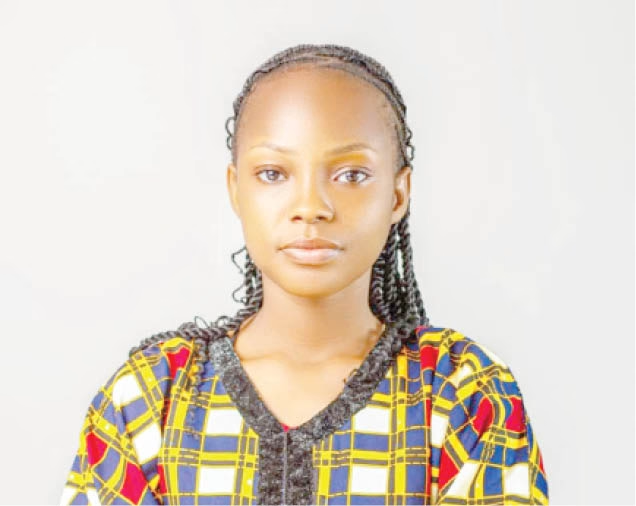
One of the trending issues on the social media is the victory of Miss Aaue Samuel Olubari, the youngest elected councillor from Bangha Ward 7 in the just concluded local government election in Rivers State. As debates continue online over her age, with some alleging that she is only 19, Olubari clarifies, saying she is 26. She spoke on the intimidation, stereotypes and challenges she faced and how she overcame to secure victory.
How did you feel after you were declared winner?
I felt deeply grateful and humbled. Winning is not just a personal victory, it is a mandate from the people of Bangha Ward 7. At the same time, I immediately felt the weight of responsibility to deliver tangible improvements quickly because people’s expectations are high. The community rallied around me to ensure that I came out victorious. I cannot afford not to represent them well or disappoint them.
I must also express my special gratitude to His Royal Majesty, King Suanu Baridam, who insisted that our community be represented in the council and governance. Through his inclusive zoning system, smaller communities like mine – Koro – were given a chance to participate fully in politics. I owe him everything, particularly for believing in me as a woman and a young one at that and allowing me to have this opportunity to serve.
Insecurity: IDPs take over schools in Benue, Niger, Katsina
‘Nigerians must register to choose right leaders’
Let’s clarify your age. The internet was awash recently with news that you are 19; how old are you?
I am 26 years old. It is painful that some people use my small body size to judge my age, but the truth remains that I am 26. Age should not be about appearance but experience, capacity and the vision you carry to impact positively in the society. Positive change is what I intend to do for my community.
At 26, what motivated you to run for the seat of a councillor?
I saw persistent problems in my ward, ranging from poor drainage systems, inadequate primary health care, limited economic opportunities for youths, especially women. I wanted someone who understands the perspective of the youth to be at the decision-making table and decided to run after I was called upon by my people to represent them.
I was motivated by the desire to prove that young people can lead responsibly. Many times, the older generation makes decisions on our behalf without fully understanding our struggles or the perspectives we see things from. I feel strongly that youthful energy and fresh ideas can bring practical solutions to the challenges facing our communities. That conviction pushed me to contest, even when some people thought it was impossible for me to win.
As a young female politician, how challenging were the campaigns?
The campaigns came with real challenges. First were the stereotypes – many people believed politics was not a place for women, especially someone of my age. I faced intimidation in some quarters, including attempts to discourage me from moving around freely during mobilisation.
Then there was the issue of limited campaign funds. I could not afford the kind of elaborate campaign rallies others organised, so I focused on door-to-door engagement and direct conversations with the people. Interestingly, this personal approach worked in my favour because people appreciated my sincerity. In that process, I felt the real pulse of the people and could connect with them and their issues on a personal level.
What gave me strength was the support I received from the community, especially women leaders and elders who believed in my vision and capacity. Their encouragement gave me the courage to keep going, even when it was tough.
Will your tenure be youth and women-oriented?
Yes, very much so. Given the current trend of young politicians across the country, my tenure will focus on issues affecting youth and women, such as education, economic empowerment and health care.
For youths, I want to champion programmes that create jobs and skills acquisition opportunities so they are not left idle. For women, I want to push for better access to health care, especially maternal health and to encourage more women to be involved in community leadership. I believe that when women and the youth are empowered, the entire society benefits.
Why politics at such a young age; and how long have you been in politics?
I have been active in community initiatives and youth advocacy for several years. For the past one to two years, I also participated actively in grassroots activities of my party.
I believe problems are solved faster when those directly affected are part of the solution. For instance, young people face unemployment, lack of access to opportunities and limited representation. Who is better to speak for them than someone who is experiencing these realities too?
My commitment to serving my community and addressing pressing issues is what set me apart and gave people confidence in my candidacy.
Rivers State is largely Peoples Democratic Party (PDP); why contest under the APC?
I contested under the APC because the party gave me a platform to express myself and because my campaign team and many local supporters were already working with the party.
However, beyond party lines, my focus is service delivery. I believe development should not be tied to party differences. I am ready to collaborate with anyone, regardless of political affiliation, to bring meaningful projects and progress to Bangha Ward 7.
Do you have a political godfather?
I do not have a political godfather. What I have are mentors and supporters – family members, community elders and women leaders who have guided me and provided advice when I needed it.
But ultimately, I am not beholden to any single individual. My duty is to my constituents and transparent service.
Who are your political role models?
I am inspired by women and young leaders who put service before self. Locally, I look up to several women leaders in Rivers State who have worked tirelessly to uplift their communities. On a broader scale, I admire youthful activists across Nigeria who are fighting for accountability and social justice.
With 2027 approaching, what advice do you have for the youth?
My advice for youths is simple: get informed, get registered to vote and get involved in grassroots politics. Don’t wait until election season to show interest. Politics is about daily civic engagement – volunteering, attending community meetings and holding leaders accountable.
Young people must build skills, form networks and support one another. If we stay united and persistent, we can make our voices count.
What do you think about female participation in politics?
I hope to see far more women running and winning elective positions in the years ahead. For that to happen, we need deliberate mentorship programmes for young women, financial support structures for female candidates and broader public awareness about the value women bring into governance.
I am also an advocate for women’s participation in governance and will continue to encourage women’s participation in leadership and decision-making roles, challenge stereotypes and will vigorously continue to address violence against women and girls.
Outside politics, what do you enjoy doing?
Outside politics, I enjoy reading, mentoring young people in my community, spending quality time with family and listening to music. These activities keep me grounded and remind me that life is bigger than politics.
What inspires you to keep fighting for people’s rights?
The people of Bangha Ward 7 inspire me every day, especially the mothers and young people I have met who work so hard yet still lack access to basic services. Their resilience, despite the difficulties they face, motivates me to continue working for them.
What message do you have for youths in the state facing current political challenges?
They should stay peaceful, engaged and never lose hope. Do not be discouraged by the challenges you see around you. Use your voice. Register to vote, participate in elections, volunteer during campaigns and hold leaders accountable. Change is possible when young people organise, persist and believe in themselves.